
AI - its impact on SMEs and on Jobs
At Parliament today, I spoke for 20 minutes on Budget 2026 , on a topic I am concerned about - AI - its impact on SMEs, on Jobs and gave several recommendations to address my concerns. I hope you care about this important topic too.
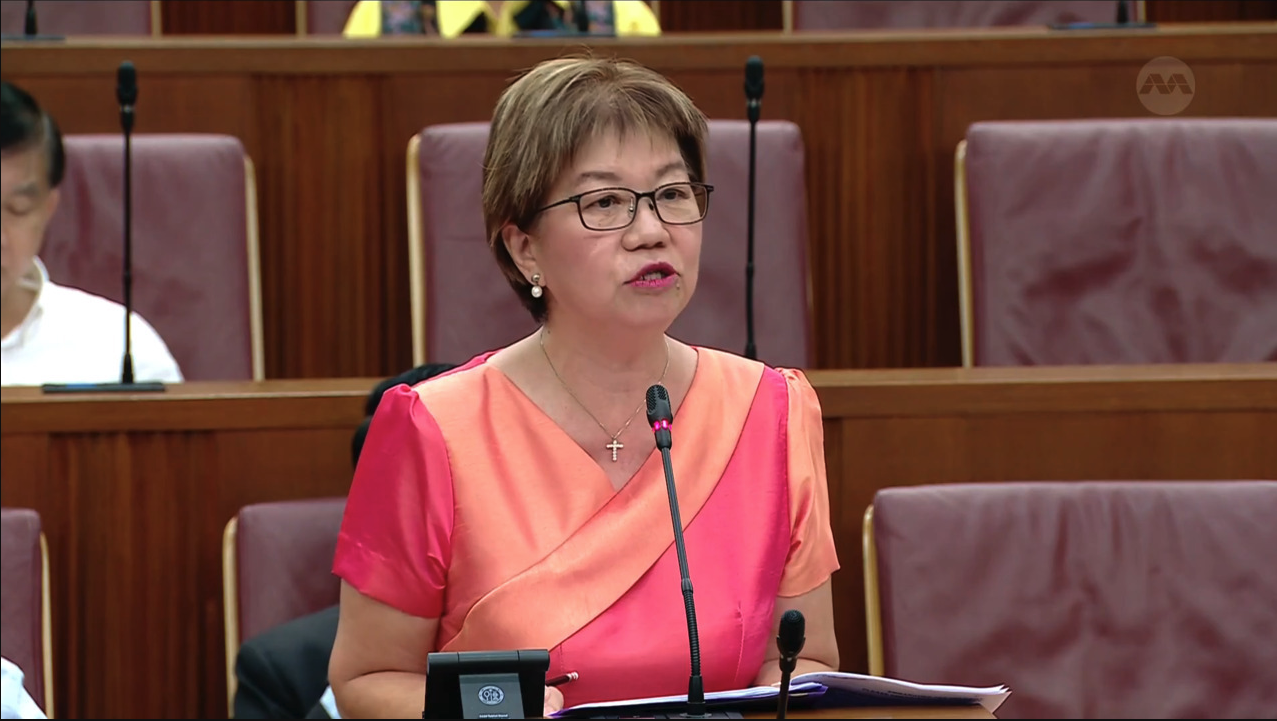
Watch my full speech here: https://www.channelnewsasia.com/watch/budget-2026-debate-denise-phua-inclusive-ai-adoption-5949391
Image credit: CNA
The Real Impact of AI
AI is no longer peripheral to Singapore’s plans — it is central to our economic strategy under Budget 2026.
But let us be clear: this is not just a digital upgrade. AI is reshaping the real economy — the industries that make, move and deliver goods and services, where most Singaporeans work.
Machines are no longer just executing instructions. They are sensing, learning and making decisions. We are seeing “lights-out” factories operating 24/7. AI-powered systems are cooking food, moving inventory, assisting nurses and guiding seniors. This is automation with cognition.
For a high-cost, labour-scarce economy like Singapore, automation was already necessary. But AI-driven automation accelerates change because it does not just replace muscle — it begins to replicate judgment.
The question is not whether AI will reshape Singapore.
The question is whether we shape this transformation deliberately — upgrading our firms and uplifting our workers — or allow intelligent systems to outpace our preparedness.
On AI Impact on SMEs & Three Recommendations
If we are serious about bringing everyone along, SMEs cannot be an afterthought.
They make up 99% of our enterprises and employ 70% of our workforce. They are the economy.
Yet in 2024, only 14.5% of SMEs adopted AI — compared to 62.5% of larger firms. Some firms are sprinting. Many are walking. Too many have not even started.
The issue is rarely willingness. SMEs ask three practical questions:
What works for my sector?
Who can help me implement?
How do I pay for it?
AI is not plug-and-play. Without clean data, workflow redesign and leadership commitment, adoption becomes cosmetic. We digitise inefficiency.
To avoid a two-speed economy, we need precision support:
A National SME AI Readiness Scan — classify firms and tailor support.
Government-funded embedded AI coaches — hands-on implementation, not just seminars.
Stronger intermediaries — equip SME Centres, SBF, NTUC and trade bodies with deeper AI capability.
Execution determines survival.
And survival determines jobs.
On AI Impact on jobs especially for the Vulnerable Seniors and Persons with Disabilities & Five Recommendations
At the heart of this AI transition is one deeply human question: what happens to our people’s jobs?
The disruption is two-front.
Blue-collar roles face automation and intensification.
White-collar entry roles face augmentation and shrinkage.
The real danger is not robots overnight. It is a broken ladder — fewer first jobs, stagnating wages, and gains concentrating among those who own AI.
The risks are sharper for seniors, lower-wage workers and persons with disabilities.
But we must not jump to doomsday conclusions. As Nvidia’s CEO Jensen Huang noted, in radiology AI increased productivity and demand rather than replacing doctors. AI can expand human capacity — if designed intentionally.
Five moves are critical:
A National Early Warning & Mobility System
Mandatory workforce transition plans for major AI support
Redesign entry-level pathways
Concrete job pathways for seniors and persons with disabilities
An “AI for Good Fund” to strengthen Social Service Agencies
AI adoption must be deep, worker-centred and inclusive by design.
We must move fast — and still move together.
That is AI adoption without regret, bringing everyone along.